
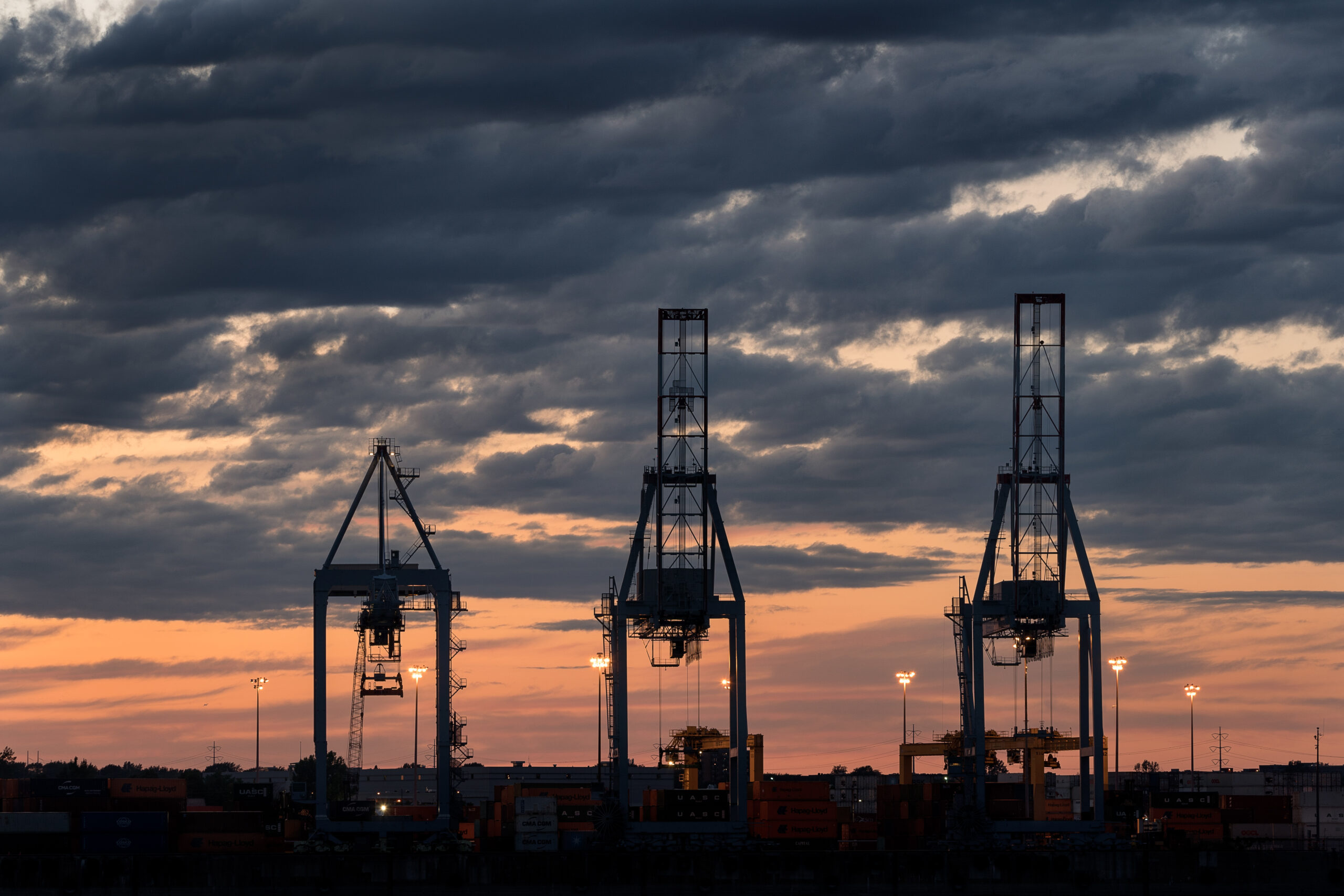
Implications for the Oil & Gas and Logistics Sectors
Focus on Iraq and the United Arab Emirates | March 2026
Recent geopolitical developments across the Middle East are beginning to materially impact energy flows, maritime routes, and supply chain continuity. For oil & gas operators, traders, and logistics providers, these developments are not merely macroeconomic – they are contractual events with immediate legal consequences.
From shipping delays and rerouting costs to disruptions in loading, delivery, and storage obligations, companies are increasingly required to assess:
Can contractual performance still be achieved – or has it become legally impossible?
This distinction lies at the heart of risk allocation across the region.
Sector Impact: Where Pressure Is Building
Oil & Gas
Operators and traders are facing disruptions to export and import routes, particularly those reliant on sensitive maritime corridors, delays in lifting, delivery, and nomination schedules, increased costs associated with alternative routing and storage, and exposure under long-term supply agreements and government-linked contracts.
Logistics and Transport
Logistics providers are encountering route instability and increased transit times, challenges in meeting delivery obligations and timelines, disputes relating to freight, demurrage, and delay penalties, and operational constraints driven by security and regulatory conditions.
Across both sectors, the legal question is no longer theoretical – it is actively shaping claims, counterclaims, and commercial negotiations.
Key Legal Issue: Disruption vs Impossibility
In both Iraq and the UAE, the legal analysis centres on whether current conditions render contractual performance impossible, or simply make performance more difficult or costly.
This distinction is particularly relevant in oil & gas and logistics, where alternative routes often exist (e.g., land transport, different ports), and performance may still be technically feasible, albeit at significantly higher cost.
In such cases, reliance on force majeure may be challenged.
Iraq: High Threshold and Commercial Rebalancing
Legal Framework
Under Iraqi law, force majeure requires proof that performance has become objectively impossible due to an external event beyond the control of the obligor.
Where performance remains possible – even through alternative transport routes or adjusted logistics structures – courts are more likely to classify the situation as: exceptional circumstances (hardship). This has materially different consequences.
Practical Implications for Oil & Gas and Logistics
- Closure or disruption of a maritime route (e.g., a strategic strait) does not automatically qualify as force majeure
- Availability of alternative routes (even if less efficient or more costly) may defeat a force majeure claim
- Courts may instead adjust contractual obligations, including pricing or timelines
This approach is particularly relevant for crude oil supply agreements, LNG and refined product transport, and long-term logistics and infrastructure contracts.
Government-Linked Contracts
In Iraq, many oil & gas and logistics contracts involve state entities or ministries, introducing additional regulatory oversight, administrative decision-making impacting performance, and greater emphasis on public interest considerations.
Recent regulatory frameworks continue to recognise disruption, but do not automatically relieve contractors from liability unless strict conditions are met.
United Arab Emirates: Contract-Led Risk Allocation
Legal Framework
In the UAE, contractual wording plays a decisive role, particularly in energy and logistics agreements where risk allocation is heavily negotiated.
Force majeure claims will typically depend on the specific wording of the clause, whether the event falls within defined categories, and compliance with notice and procedural requirements.
Practical Implications
For oil & gas and logistics operators, well-drafted clauses may provide clear protection, while poorly drafted or generic clauses may limit available remedies. Failure to comply with notice provisions may invalidate claims, even where disruption exists
In contrast to Iraq, there is generally less scope for judicial rebalancing – placing greater emphasis on front-end contractual structuring.
Key Risk Areas for Oil & Gas and Logistics Companies
Current market observations indicate several recurring vulnerabilities:
- Assuming route disruption automatically excuses performance
- Failing to assess whether alternative delivery mechanisms exist
- Overlooking demurrage and delay exposure
- Not aligning operational decisions with contractual obligations
- Delayed or insufficient formal notice to counterparties
- Limited engagement with regulatory and government stakeholders
These issues are particularly acute in FOB and CIF delivery structures, charterparty arrangements, and midstream transport and storage agreements.
Strategic Considerations for the Oil & Gas and Logistics Sectors
Companies operating in the oil & gas and logistics sectors should consider immediate steps to protect their position:
1. Contractual Positioning
- Review force majeure and hardship provisions across key contracts
- Assess exposure under supply, transport, and storage agreements
2. Operational Alignment
- Evaluate availability and viability of alternative routes and logistics solutions
- Document all mitigation efforts in real time
3. Claims Management
- Issue timely and compliant notices
- Maintain detailed records of disruption, cost impact, and operational constraints
4. Jurisdictional Strategy
- Consider how different legal frameworks (Iraq vs UAE) will affect outcomes
- Align dispute strategy with local legal and administrative practice
Conclusion: implications for the Oil & Gas and Logistics Sectors
For oil & gas and logistics companies, the current environment highlights a critical point:
Disruption alone is not enough to alter contractual liability.
The legal outcome will depend on whether performance is truly impossible, or simply more complex and expensive.
In Iraq, this distinction may lead to judicial adjustment rather than contractual relief. In the UAE, it will depend primarily on contractual drafting and compliance.
In both cases, early legal positioning is essential to managing risk and preserving commercial leverage.
FAQ: MENA Geopolitical Developments & Contractual Risk (March 2026)
The update focuses on how geopolitical disruptions in the Middle East impact contractual performance in the oil & gas and logistics sectors. The key legal question is whether these disruptions render performance objectively impossible or simply make it more difficult or costly. This distinction is critical because it determines whether a party can invoke force majeure to excuse non-performance or whether it must continue performing despite adverse conditions and bear the associated risks.
These developments go beyond operational inconvenience because they are actively triggering legal consequences under existing contracts. Disruptions such as delays, rerouting, and regulatory constraints are leading to missed obligations, increased costs, and disagreements over timelines. As a result, companies are facing claims and counterclaims, particularly regarding liability for non-performance, allocation of additional costs, and responsibility for delays.
Oil and gas companies are experiencing disruptions primarily in the form of constrained or unstable export and import routes, particularly across key maritime corridors. These challenges are causing delays in lifting schedules and deliveries, while also increasing operational costs due to rerouting and the need for additional storage. The impact is especially significant under long-term supply agreements and contracts involving government entities, where obligations tend to be rigid and exposure to liability is heightened.
Logistics providers are dealing with increased route instability, which has led to longer and less predictable transit times. This makes it more difficult to meet agreed delivery deadlines and has resulted in disputes over demurrage, freight charges, and delay penalties. In addition, security risks and evolving regulatory requirements are complicating operations, further increasing the likelihood of contractual non-compliance.
The central legal distinction lies between force majeure and hardship. Force majeure applies where performance is rendered objectively impossible due to external and uncontrollable events. By contrast, hardship arises where performance remains possible but has become significantly more burdensome, expensive, or complex. Correctly categorizing the situation is essential, as it directly affects the remedies available and the allocation of risk between the parties.
Route disruption does not automatically qualify as force majeure. If alternative routes or methods of performance are available, even if they are less efficient or more costly, courts are unlikely to accept that performance is impossible. In such cases, the situation is more likely to be treated as hardship rather than force majeure, meaning that contractual obligations generally remain in place.
Under Iraqi law, the threshold for establishing force majeure is relatively high, requiring clear proof of objective impossibility. Where performance remains possible through alternative means, courts are more likely to classify the situation as exceptional circumstances rather than force majeure. In such cases, the court may intervene to rebalance the contract – for example, by adjusting prices or extending deadlines – rather than fully excusing performance or liability.
In the United Arab Emirates, the legal outcome depends heavily on the wording of the contract itself, particularly the scope of the force majeure clause. Courts place significant emphasis on whether the clause clearly covers the relevant disruption and whether the affected party has complied with procedural requirements such as timely notice. Strong, well-drafted clauses can provide substantial protection, while weak drafting or procedural failures can limit or eliminate available remedies.
Contracts involving government entities introduce additional layers of complexity, including regulatory oversight and the potential for administrative intervention. Public interest considerations may also play a role in how disputes are resolved. As a result, even where disruption is evident, liability is not automatically excused, and outcomes may be influenced by factors beyond the strict contractual framework.
Common risk areas include the mistaken assumption that disruption alone excuses performance, without adequately considering whether alternatives exist. Companies are also frequently underestimating their exposure to demurrage and delay-related costs, failing to align operational decisions with contractual obligations, and neglecting procedural requirements such as timely notice. Limited engagement with regulators further compounds these risks.
Contracts that are particularly exposed include FOB and CIF arrangements, where the allocation of risk depends on delivery points and transport obligations. Charterparty agreements are also highly sensitive to delays and route disruptions, as are midstream transport and storage agreements, which rely heavily on timing, continuity, and logistical stability.
Companies should begin with a comprehensive review of their contracts, focusing on force majeure and hardship provisions across supply and logistics arrangements. At the same time, they should assess operational alternatives and ensure that all mitigation efforts are properly documented. From a legal perspective, it is essential to issue timely and compliant notices while maintaining detailed records of disruptions and associated costs. Strategic planning should also take into account jurisdictional differences, particularly the likelihood of judicial rebalancing in Iraq and the contract-driven approach in the UAE.
The key takeaway is that disruption alone does not excuse contractual performance. In Iraq, courts are more likely to rebalance contractual obligations rather than discharge them entirely, while in the UAE, outcomes depend primarily on the strength of contractual drafting and compliance with procedural requirements. In both jurisdictions, early and proactive legal positioning is essential to preserve rights, manage risk exposure, and maintain commercial leverage.
About Salt & Associates
Salt & Associates advises leading clients in the oil & gas and logistics sectors across the MENA region, with particular expertise in high-risk and complex jurisdictions such as Iraq.
The firm supports clients on:
- Energy and supply chain contracts
- Government-linked projects and concessions
- Cross-border disputes and arbitration
- Regulatory engagement and market entry
Our approach combines sector-specific insight with deep local execution capability.